
Nan Chauncy Award

The award recognises that children's literature is supported by a much wider community than the writers and illustrators whose names appear on book covers. It celebrates the people who work behind the scenes, champion emerging talent, promote reading and ensure that quality Australian stories reach young audiences.
why is this award important
Children's books play an important role in shaping young minds. They introduce children to new ideas, cultures, histories and experiences. They encourage imagination, empathy, curiosity and an understanding of the world around them.
The Nan Chauncy Award acknowledges the people who dedicate their professional and personal lives to ensuring that children have access to meaningful, engaging and high-quality literature.
It is particularly fitting that the award carries the name of Nan Chauncy, an author whose own work helped establish a distinctive Australian voice in children's literature.
The award was initially presented every five years. In 1999, the CBCA decided to make it a biennial award, allowing more frequent recognition of outstanding contributions to the field.
who was nan chauncy
Nancern Beryl (Nan) Chauncy (1900-1970)
Nan Chauncy was one of Australia's most highly regarded children's authors and an important figure in Tasmania's literary and cultural history.
Born Nancen Beryl Masterman in Northwood, Middlesex, England, on 28 May 1900, Nan migrated to Tasmania with her family in 1912 when she was twelve years old.
The family settled in the Bagdad district, where they established an orchard and began clearing land and building a home. It was here that Nan developed a deep affection for the Tasmanian bush, its wildlife, caves, waterways and natural environment.
Her childhood experiences in the Southern Midlands would have a lasting influence on her writing. The landscape surrounding her home provided the setting and inspiration for many of her stories, giving readers a distinctive glimpse into rural Tasmanian life.
Nan's love of the outdoors extended beyond her writing. She was actively involved in the Girl Guides movement, becoming a leader and later a Commissioner. She also developed a strong interest in conservation and the protection of wildlife.
In 1938, Nan married Anton Rosenfeldt, and the couple made their home at Day Dawn. They subsequently adopted the surname Chauncy, which Nan took from her paternal grandmother's family name.
Nan began writing professionally through articles, radio scripts and eventually children's novels. Her first full-length novel, They Found a Cave, was published in 1948 and introduced readers to the adventurous world of children exploring the Tasmanian bush.
The book was particularly successful and was later adapted into a feature film in 1962.
Over her writing career, Nan produced fourteen novels, many of which drew upon the natural environment, pioneering life, wildlife and the experiences of children growing up in Tasmania.
Her books were translated into numerous languages and made available to readers internationally.
A pioneering Australian author
Nan Chauncy was recognised for bringing a new level of realism to Australian children's literature.
Her stories featured believable children, recognisable Australian landscapes and situations that reflected the experiences of young people. Rather than relying solely on imaginary settings, she drew upon the world around her.
Her writing also demonstrated an early and important interest in conservation and the natural environment.
Her treatment of Aboriginal themes in books such as Tangara and Mathinna's People was also significant for its time. These works helped introduce young readers to aspects of Tasmanian Aboriginal history and experience, although they should also be understood in the historical context in which they were written.
Her major literary achievements
Nan received the Children's Book of the Year Award three times:
Tiger in the Bush
1958 – CBCA Book of the Year
One of Nan's best-known stories, drawing on the Tasmanian bush and the adventures of young people.
Devil's Hill
1959 – Joint winner
Another celebrated work demonstrating Nan's ability to create compelling stories grounded in the Australian landscape.
Tangara
1961 – CBCA Book of the Year
A significant novel exploring Tasmanian settings and Aboriginal themes.
In 1961, Nan also became the first Australian author to receive the Hans Christian Andersen Award Diploma of Merit, an important international recognition of her contribution to children's literature.
Her achievements established her as one of Australia's pioneering children's writers and secured her place in the history of Australian literature.
nan chauncy and day dawn
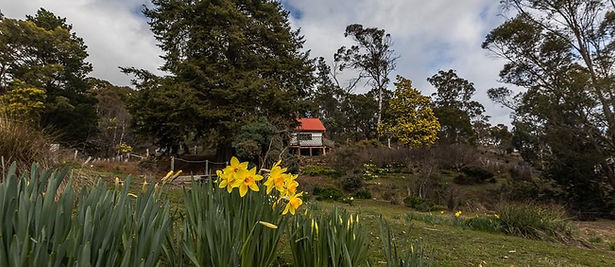
The place where stories were created.
Day Dawn, located within Chauncy Vale Wildlife Sanctuary near Bagdad in Tasmania's Southern Midlands, holds a special place in Australian literary history.
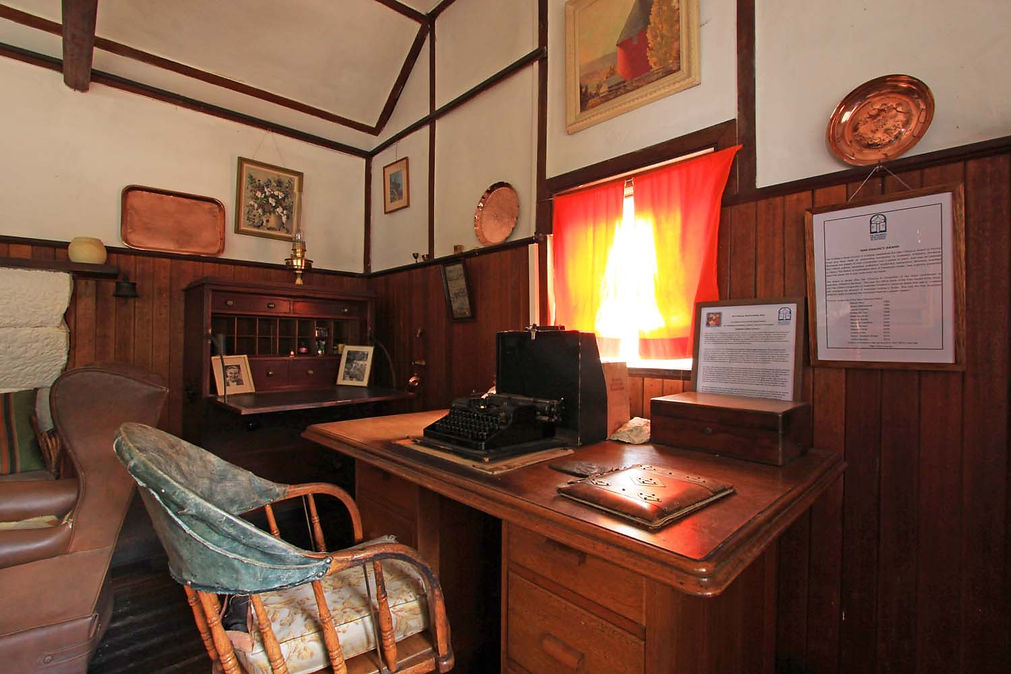
It was here that Nan Chauncy lived, wrote and found inspiration for many of her stories.
The cottage and the surrounding bushland were not simply a place to live. They were an important part of Nan's creative world, providing the setting, atmosphere and experiences that would become central to her writing.
The landscape of Chauncy Vale, with its rocky outcrops, caves, waterways, native wildlife and bush tracks, provided an extraordinary natural environment for a writer whose stories were so closely connected to the Australian landscape.
Nan's experiences at Day Dawn helped shape stories that introduced generations of children to the beauty, adventure and challenges of life in the Tasmanian bush.
A home that became part of literary history
Nan and her husband Anton were committed to protecting the natural environment surrounding their home.
In 1946, they established the property as a wildlife sanctuary, helping to protect the bushland and its wildlife at a time when conservation was not as widely recognised as it is today.
Their work demonstrated a strong commitment to preserving the natural environment for future generations.
The cottage known as Day Dawn is particularly significant because Nan wrote all her published books there.
The Tasmanian Heritage Register recognises the importance of Chauncy Vale for its association with Nan Chauncy and Anton Chauncy, their conservation work and their contribution to Tasmania's cultural heritage.
The connection between place, nature and literature
Visitors walking through Chauncy Vale can experience many of the natural features that influenced Nan's writing.
The caves, bushland, wildlife and distinctive landscape help bring her stories to life. They provide a tangible connection between the books she created and the environment in which she lived.
Her writing reminds us that stories can grow from the places we know, the people we meet and the natural world around us.
Why recognise the Nan Chauncy Award at Day Dawn?
The Nan Chauncy Award celebrates people who have made an outstanding contribution to Australian children's literature. Day Dawn is the place most closely associated with Nan's own literary achievements.
Recognising the award at her former home creates a meaningful connection between the award's purpose and the person whose legacy it honours.
Day Dawn is more than a historic cottage. It is a place where Australian stories were created, where conservation values were championed and where the legacy of an important Tasmanian author continues to live on.
The Books of Nan Chauncy
Nan Chauncy wrote fourteen novels for children during her lifetime. Her books helped change Australian children's literature by introducing young readers to realistic Australian settings, believable child characters and stories shaped by the natural environment.
Her writing was strongly influenced by her life in Tasmania. The bushland, caves, wildlife and rural communities surrounding her home at Day Dawn provided inspiration for many of her stories.
Nan's novels combined adventure and suspense with an appreciation of nature, an interest in history and a concern for the relationships between people and their environment. Her stories were enjoyed by Australian readers and also reached audiences overseas, with several titles translated into other languages.
The History of the Nan Chauncy Award
The Children’s Book Council of Australia established the Nan Chauncy Award in 1983 to recognise Nan's important contribution to Australian children's literature.
The award was created to acknowledge that the development of children's literature depends upon the dedication of many people, not just authors and illustrators.
Since its establishment, the award has recognised a range of people whose work has supported, developed and promoted Australian books for children and young people.
How the award has evolved
-
1983: The inaugural Nan Chauncy Award was presented.
-
1983–1998: The award was presented every five years.
-
1999: The CBCA decided to move to a biennial presentation.
-
Today: The award continues to recognise outstanding contributions to Australian children's literature.
The award is particularly significant because it recognises sustained contributions over a period of years rather than a single publication or achievement.
The selection criteria consider the nature and duration of a nominee's contribution, exceptional work beyond their paid employment, their influence on colleagues and the wider public, and supporting evidence of their achievements.
This makes the award a celebration of dedication, leadership, advocacy and the people who help Australian children's literature flourish
Nan Chauncy Award Recipients
Recognising those who continue to shape Australian children's literature.
Each recipient of the Nan Chauncy Award represents an important contribution to the world of children's literature.
The recipients have worked across publishing, writing, illustration, education, librarianship, advocacy and the promotion of reading.
Their achievements demonstrate the many different ways in which people can influence children's access to stories and help develop a lifelong love of reading.
Recipients
2025 - Wendy Rapee
2023 - Jenny Stubbs
2021 - Jan Nicholls
2019 - James Moloney
2017 - Mem Fox
2015 - Libby Gleeson
2012 - Robyn Sheahan-Bright
2010 - Lesley Reece
2008 - Margaret Wild
2006 - Muriel Barwell
2004 - Margaret Hamilton
2002 - Maurice Saxby
2000 - Belle Alderman
1998 - Walter McVitty
1963 - Laurie Copping
1988 - Joyce Oldmeadow
1983 - Marcie Muir
For further information - https://cbca.org.au/nan-chauncy-award/